 Tiếng Việt
  English
 Homebuyers are hesitant to take out loans despite easing interest rates.
Despite having VND 1.5 billion on hand, Mr. Huy is still reluctant to borrow nearly VND 3 billion more to purchase a new apartment on an installment plan, even with discounts of up to 10% and preferential interest rates.
Mr. Dang Huy and his wife, from Gia Lam District, Hanoi, had planned to buy a two-bedroom apartment in an eastern urban area after years of renting. Combining their savings and financial support from both families, they have VND 1.5 billion and initially intended to borrow an additional VND 1.5 billion to buy a home. They planned to choose newly launched units to benefit from discounts, preferential interest rates, and phased payment schedules.
Earlier this month, after hearing about a project consisting of three 37-story towers developed by a foreign investor that had begun accepting bookings, Mr. Huy contacted a broker for more details. However, he was surprised to find that the actual selling price was about 20% higher than the rumored market-testing price. To purchase a 54-square-meter two-bedroom unit, the couple would now need to borrow nearly VND 3 billion. Despite incentives such as 0% interest rates until early 2027 and discounts of up to 10%, the payment schedule still poses a significant financial burden for a family with two young children.
Similarly, Ms. Thu Hoai in Thu Duc City said she is not keen on taking out a home loan at this time, even though her family has nearly VND 2 billion in savings. She noted that current lending rates are relatively low, ranging from 4% to 6.5% for short-term loans of 3–18 months at state-owned banks. At joint-stock commercial banks, fixed interest rates for 12–18 months are around 7.2% to 9.8%, after which floating rates rise to about 10–11%. However, finding a property that fits their budget is difficult due to persistently high prices. To buy a newly completed apartment large enough for a family of four, the budget would need to be at least VND 4 billion.
Ms. Hoai calculated that if she borrowed VND 2 billion over 20 years at an annual interest rate of 8%, the peak monthly payment (principal and interest) would be nearly VND 22 million, not including potential increases when the rate becomes floating. This amount accounts for nearly half of the family’s monthly income. Concerned about ongoing economic uncertainty, she believes that “taking out a bank loan at this time is too much of a burden,” so her family has decided to postpone buying a home.
A sales director at a brokerage firm specializing in apartment projects in eastern Hanoi said that in previous years, the fourth quarter was typically the most active period due to the “year-end home buying” sentiment. However, this year, transactions have been significantly subdued as most buyers are hesitant to commit. Even investors with substantial cash reserves are reluctant to make outright purchases, as prices are approaching peak levels, reducing profit margins and future price appreciation potential.
According to a recent survey by VnExpress with nearly 11,000 respondents, almost 40% said they are not interested in buying apartments at this time due to high prices. Additionally, around 2,500 respondents believe prices are still unreasonable and prefer to continue renting.
Commenting on this situation, Tu Tien Phat, CEO of Asia Commercial Bank (ACB), said that fixed mortgage interest rates for five years at his bank are currently only around 8–8.5%, one of the lowest levels in many years. However, in the first nine months of the year, mortgage lending growth has slowed significantly compared to the same period last year, reaching less than 10%, lower than the bank’s overall credit growth rate of 14%.
According to him, the real estate market in general, and in Ho Chi Minh City in particular, still faces numerous challenges related to investment procedures and new project development. As a result, the main demand in the market is concentrated in secondary transactions—buying and selling between individuals.
“Rising housing prices have created hesitation among both investors and homebuyers. Expectations for recovery are now shifting to next year,” Mr. Phat said.
According to data from the State Bank of Vietnam, as of the end of September, outstanding real estate credit reached VND 3.15 quadrillion, accounting for nearly 21% of total outstanding credit in the economy. Of this, lending for real estate business activities increased by 16%, while home loan lending rose by only 4.6%. Although this represents an improvement of 3.5% compared to last year, the growth remains low, indicating weak demand for home loans among the public.
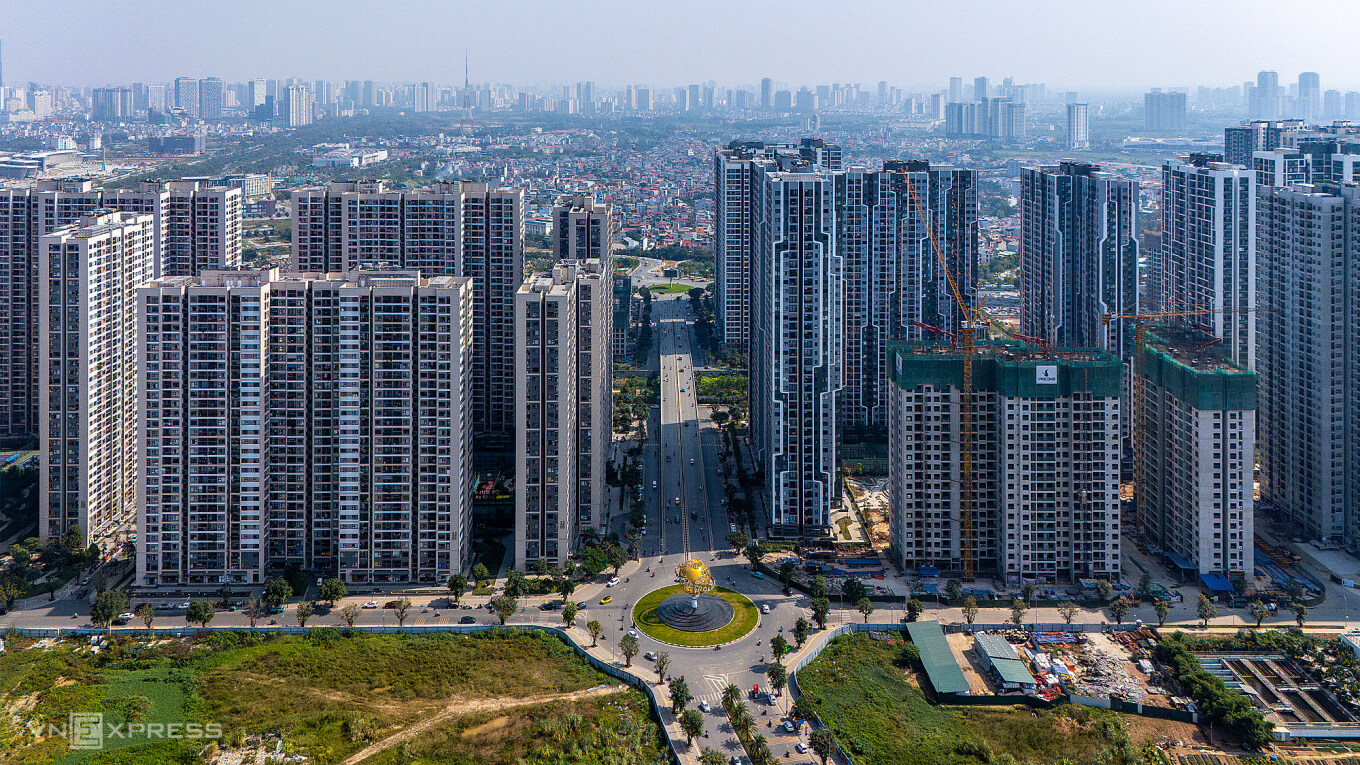
Nguyen Van Dinh, Chairman of the Vietnam Association of Realtors (VARS), noted that housing demand in major urban areas remains high but is concentrated in the affordable segment. However, this segment has effectively disappeared in Ho Chi Minh City since 2021 and in Hanoi since 2023. In these two cities, about 80% of newly launched projects since the beginning of the year belong to the high-end segment or above.
This situation has driven housing prices to continuously rise, far exceeding the affordability and income growth of most people. While demand for affordable housing remains significant, this segment has been largely “neglected,” Mr. Dinh said.
Sharing the same view, Can Van Luc, Chief Economist at BIDV, stated that the core issue lies in housing prices remaining at very high levels, despite developers introducing various stimulus policies and incentives in recent times. Even though mortgage interest rates have dropped to very low levels—down by about 2–3% compared to last year—household incomes are still under pressure.
“People see that housing prices are too high, so they choose to delay and wait for more reasonably priced products,” Mr. Luc said.
In the near future, apartment supply is expected to improve, but the high-end segment will continue to dominate the market, while the affordable segment remains scarce. OneHousing—a real estate service provider backed by Masterise Homes and Techcombank—forecasts that in 2025, Hanoi will see more than 30,000 new apartments, of which high-end units will account for 64% and luxury units 36%. In Ho Chi Minh City, apartment supply could reach up to 12,000 units in 2025, but will still mainly consist of high-priced products. This will further exacerbate the imbalance in the housing market.
Experts warn that in the long term, if the continuous rise in real estate prices is not addressed promptly, it could lead to various negative consequences for both the market and society. Mr. Nguyen Van Dinh recommended that regulators should soon implement measures to “unlock” the development of affordable commercial housing and social housing. At the same time, developers need to intensify research and product development aligned with market demand and the financial capacity of the majority of people, rather than focusing excessively on high-end and luxury segments.
Ngọc Diễm - Quỳnh Trang